
Said by Catholic, Lutheran, Anglican, Methodist and Reformed Christians
The Apostles’ Creed
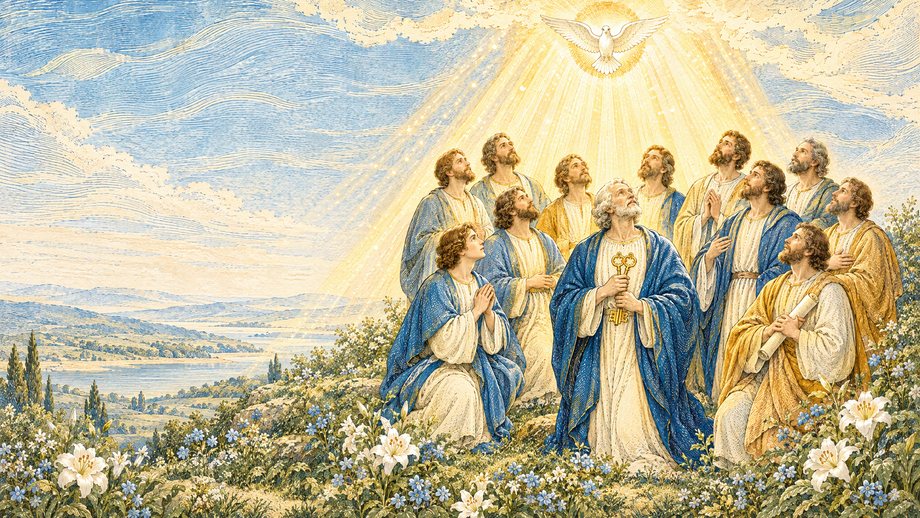
Where it comes from
The Apostles’ Creed is the faith of the church in a few short lines. “Creed” comes from credo, Latin for “I believe,” its first word. It names God the Father, then Jesus from his birth to his coming again, then the Holy Spirit and the life God gives.
An old story says each of the twelve apostles gave it one line. The story was already being told around the year 390, when a church council in Milan called it “the Symbol of the Apostles.” Historians tell it differently. The creed grew out of the questions put to new Christians at their baptism in Rome, and it reached the words we know by the 700s. The apostles didn’t write it down, and it holds what they taught.
Catholics, Lutherans, Anglicans, Methodists and Reformed churches all say this creed, and the wording moves a little from church to church. The traditional words below come from the American Prayer Book of 1928, which says “Holy Ghost” where the Catholic wording says “Holy Spirit,” and many Lutherans say “the holy Christian Church” where others say “catholic.” “Catholic” here is the old word for universal: the whole church, everywhere. That same Prayer Book even let churches say “He went into the place of departed spirits” in place of “He descended into hell,” and newer versions say “He descended to the dead.” The faith underneath is the same.
The Apostles’ Creed
I believe in God the Father Almighty, Maker of heaven and earth:
And in Jesus Christ his only Son our Lord: Who was conceived by the Holy Ghost, Born of the Virgin Mary: Suffered under Pontius Pilate, Was crucified, dead, and buried: He descended into hell; The third day he rose again from the dead: He ascended into heaven, And sitteth on the right hand of God the Father Almighty: From thence he shall come to judge the quick and the dead.
I believe in the Holy Ghost: The holy Catholic Church; The Communion of Saints: The Forgiveness of sins: The Resurrection of the body: And the Life everlasting. Amen.
The Book of Common Prayer (1928), Morning Prayer; traditional English wording
How people pray it
Say it slowly, as a list of things you are standing on. Some lines will come easily today and some won’t. That’s all right. Christians have always said the creed together, and on the days you can’t say a line for yourself, you can say it with the church, the way you’d lean on a friend’s arm.
Two old phrases, in today’s words: “sitteth on the right hand” means Jesus has the place of honor beside the Father, and “the quick and the dead” means the living and the dead.
If doubt is loud today, the Gospels have a prayer for that too. A father begging Jesus to heal his son cried out, “Lord, I believe; help thou mine unbelief” (Mark 9:24). Say the creed, then say his line. Jesus healed the boy.
More classic prayers
- Made by Catholic, Orthodox, Lutheran and Anglican Christians, and many more The Sign of the Cross
- Prayed by Christians of every tradition The Lord’s Prayer Matthew 6:9-13
- A Catholic prayer, loved well beyond the Catholic Church The Hail Mary
- Said by Catholic, Orthodox, Anglican and Lutheran Christians, and many more The Glory Be